
MTR is the leading supplier of membrane system for hydrocarbon recovery from petrochemical plant vents.
problem
Polyvinyl chloride (PVC) is produced by polymerization of vinyl chloride monomer (VCM). Unreacted VCM is pumped out of the reactor and condensed, and non-condensable gases are vented from the condenser. Depending on the temperature and pressure of the condenser, the vent stream also contains from 50 to 2,000 lb/h of VCM. As VCM emissions are tightly regulated, the vent stream must typically be incinerated and scrubbed before release.
VaporSep® Solution
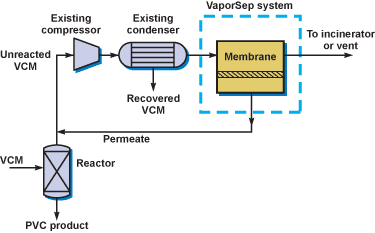
The vent stream from the existing VCM condenser is sent to the VaporSep system. VCM passes through the membrane at a greater rate than inert gases, producing a VCM-enriched permeate and a VCM-depleted residue. The permeate is recycled to the inlet of the existing compressor and the residue is incinerated. The VCM recovered by the VaporSep system is condensed in the existing condenser.
VaporSep systems allow PVC producers to recover 90% to 99+% of the VCM currently lost in vent streams, providing a significant economic benefit.
VaporSep systems are currently used by major PVC producers including Oxyvinyls, Westlake, Solvay, and Aiscondel.
Benefits
- Achieves significantly higher VCM recovery than possible by condensation alone
- Achieves recovery at more moderate temperatures and pressures than condensation alone
- Minimizes footprint and weight
- Minimizes maintenance with no moving parts
- VCM recovery up to 99+%
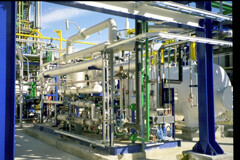
This VaporSep system recovers 1000 tons per year of VCM.
System Performance
- Complete, skid-mounted unit includes all necessary instrumentation and controls
- Unit dimensions: 6 to 15 ft (L) x 6 ft (W) x 6 ft (H); 5,000 to 15,000 lb
System Description
- Suitable for vent streams from 50 lb/h to greater than 2,000 lb/h, with VCM concentrations from 20 to 80 vol%
Frequently Asked Questions
Why is VCM recovery important in PVC production?
VCM recovery is critical because a significant amount of unreacted vinyl chloride monomer (VCM) is lost in vent streams during PVC production. These emissions are strictly regulated and often require incineration before release. Recovering VCM not only ensures environmental compliance but also allows manufacturers to reuse valuable raw material, improving overall process efficiency and reducing operating costs.
How does membrane-based VCM recovery technology work?
Membrane-based systems, such as VaporSep®, separate VCM from vent gases by allowing VCM to pass through the membrane faster than inert gases. This creates a VCM-rich stream (permeate) that is recycled back into the process, while the remaining gas (residue) is treated or incinerated. The recovered VCM is then condensed and reused in production, creating a closed-loop recovery system.
What are the main benefits of VCM recovery systems?
VCM recovery systems offer several key benefits:
Recover up to 90–99%+ of lost VCM
Reduce raw material losses and improve profitability
Minimize emissions and regulatory risks
Lower energy requirements compared to traditional methods
Compact, low-maintenance systems with no moving parts
These advantages make VCM recovery both economically and operationally efficient.
What is the best technology for VCM recovery in PVC plants?
Membrane-based recovery systems are considered one of the most effective technologies for VCM recovery. Compared to conventional condensation alone, membranes achieve higher recovery rates and operate efficiently at moderate temperatures and pressures. They also offer a compact design and lower maintenance requirements, making them ideal for modern PVC plants.
How does VCM recovery support sustainability goals?
VCM recovery supports sustainability by reducing harmful emissions, lowering the need for incineration, and minimizing waste. By recycling unreacted VCM back into the production process, it reduces the demand for fresh raw materials and improves resource efficiency. This leads to a cleaner, more sustainable PVC manufacturing process with a smaller environmental footprint.