
Conditioning fuel gas using FuelSep™ minimizes costly unscheduled downtime - a smart and simple solution.
Challenge
Raw gas often cannot be used to fuel the gas engines or gas turbines driving pipeline compressors due to poor quality. Significant concentrations of H2S and/or C3+ will cause corrosion and carbon build-up in the gas engine. CO2 and nitrogen will lower the BTU value. Any of these impurities can compromise engine operation, increase downtime or at a minimum put emissions out of compliance. Their presence in the raw gas can even render the gas unusable as fuel so expensive diesel has to be trucked in.
Membrane Solution
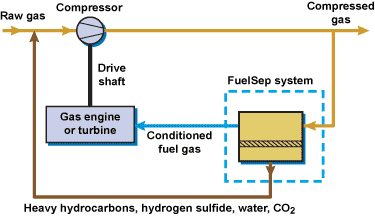
MTR’s FuelSep™ systems purify raw gas sidestreams to premium quality fuel gas. MTR membranes easily remove H2S, C3+, CO2, N2 and water from fuel gas. Because these impurities are taken out of the fuel gas and returned to the compressor suction, there are no effluent streams to be disposed of. Any C3+ removed from the fuel gas goes back into the main gas stream, so all NGL in the raw gas stream is available for downstream recovery, if desired.
These units have no moving parts, are simple to install and operate unattended. Units typically operate under ambient conditions. Feed gas heating may be required in some conditions. Many units are operating worldwide with many repeat customers.
Benefits
- Removes heavy components such as C2+ to clean up fuel gas (ethane removed also)
- Increases recovery of liquids
- Reduces gas engine NMHC (non Methane Hydrocarbon) Emissions
- Removes significant portions of acid gases such as H2S and CO2 that will reduce acid formation in the turbine or engine exhaust and reduce emissions
- Increases reliability of gas engines and turbines
- Usually operates under ambient conditions. Feed heating required in some situations.
- Eliminates need to de-rate gas engine
- Decreases maintenance costs and reduces unscheduled downtime
- Contains no moving parts, simple to operate and maintain
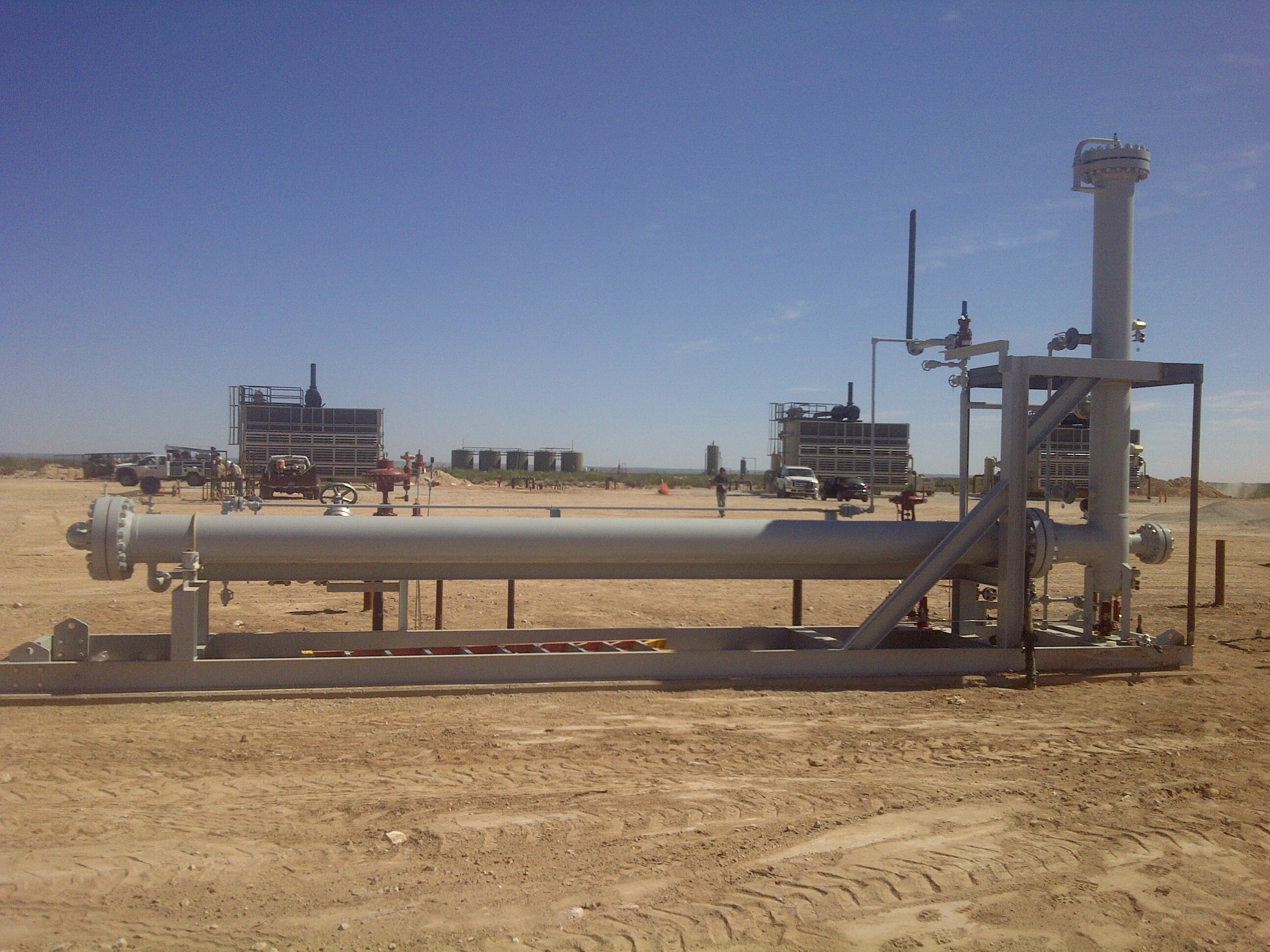
FuelSep® unit operating in Texas
System Performance
Gas Turbine Unit
- Conditioned gas flow rate: 2 to 30 MMscfd
- Raw feed C3+ content: 4 to 20 vol%
- Raw feed dew point: 80°F to 120°F
- Conditioned gas dew point: 40°F to 60°F
- C3+ removal: greater than 70%
- Typical Unit dimensions: 20 ft (L) x 10 ft (W) x 10 ft (H)
Gas Engine Unit
- Conditioned gas flow rate: 0.05 to >20 MMscfd
- Raw feed Btu value: 1100 to 1500 Btu/scf
- Conditioned fuel gas Btu value: 1000 to 1100 Btu/scf
- Feed dew point: 80°F to 120°F
- Conditioned gas dew point: 40°F to 60°F
- C3+ removal: greater than 70%
- Typical Unit dimensions: 8 ft (L) x 6 ft (W) x 6 ft (H)
Frequently Asked Questions
Why is fuel gas conditioning necessary for gas engines and turbines?
Fuel gas conditioning is necessary because raw gas often contains impurities such as H₂S, CO₂, nitrogen, and heavy hydrocarbons (C₃+) that can damage engines and turbines. These contaminants can cause corrosion, carbon buildup, and reduced fuel quality, leading to poor performance or even making the gas unusable. Proper conditioning ensures the gas meets required quality standards for safe and efficient operation.
How does fuel gas conditioning benefit my operations?
Fuel gas conditioning improves operational efficiency by enhancing fuel quality and protecting equipment. It helps reduce maintenance costs, prevent unscheduled downtime, and improve the reliability of gas engines and turbines. Additionally, it eliminates the need for alternative fuels like diesel and ensures consistent performance in demanding environments.
What types of technologies are used in fuel gas conditioning?
Fuel gas conditioning commonly uses membrane-based separation technology, such as FuelSep™ systems. These membranes selectively remove impurities like CO₂, H₂S, nitrogen, water, and heavy hydrocarbons from the gas stream. The systems are compact, have no moving parts, and operate efficiently under ambient conditions, making them easy to install and maintain.
Can fuel gas conditioning recover valuable liquids from raw gas?
Yes, fuel gas conditioning can recover valuable hydrocarbons (such as C₃+ liquids) from the raw gas stream. Instead of being wasted, these components are separated and returned to the main gas stream for downstream recovery, helping maximize resource utilization and improve overall process economics.
Does fuel gas conditioning help reduce emissions?
Yes, fuel gas conditioning significantly reduces emissions. By removing heavy hydrocarbons and acid gases like CO₂ and H₂S, it lowers harmful exhaust emissions and helps maintain compliance with environmental regulations. It also reduces non-methane hydrocarbon (NMHC) emissions and minimizes environmental impact.